

- Choose Exercises That Allow You to Train Hard Pain-Free
- Train With Good Form
- Use a Full Range of Motion
- Take Those Sets Within 1 Rep Shy of Failure’
- Hit Each Muscle Group With 2–3 Sets, 2x/Week

Choose Exercises That Allow You to Train Hard Pain-Free
It all starts right here. If you choose exercises that make your joints hurt, you’re just risking injury.
You want to choose exercises that feel good/natural to your body even when you’re pushing to the limit of what you’re capable of. This ensures your muscles take all the stress, which means you’re getting stronger, and it leaves your joints feeling better than before!
Choose 1–3 exercises for each major muscle group. You’ll train these week after week, focusing on getting as strong as possible!

Train With Good Form
Once you’ve picked the right exercises for each muscle group, you’ve got to master the form.
Before you really push it close to failure (our 4th point), you’ve got to make sure you’re moving correctly.
Good form ensures you stay safe and you’re getting the maximum benefit from the exercise.
Use a Full Range of Motion
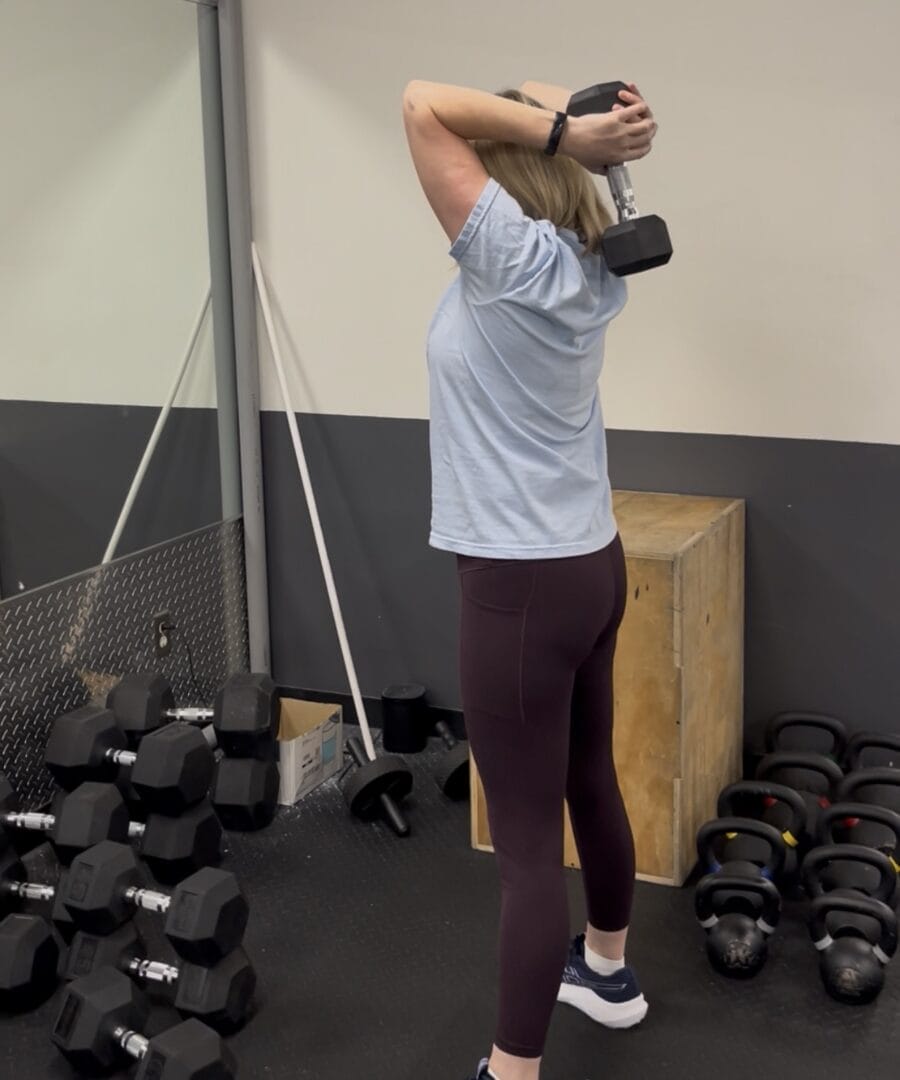
This is really the second part of the good form discussion. In some (not all) cases when you’re learning good form, you’re not able to use a full range of motion (yet) because you aren’t strong enough or comfortable enough with the movement yet.
That’s ok at first, but once you’re comfortable with the movement, you need to work on getting a full range of motion with every rep you do of that exercise.
A full range of motion is what’s going to get you the maximum benefit of each rep.
Are you noticing a theme yet? The goal of these 5 steps is to make sure you get the best results possible and stay injury-free!

Take Those Sets Within 1 Rep Shy of Failure
This is where the magic starts to happen. You’ve picked the right exercises for your body, you’re using good form, and a full range of motion.
Now we want to make every set count. Every single set you do (besides your warm-up sets) should drive progress forward.
And the best way to do that is to take each set to 1 rep shy of failure.
What exactly is failure? It’s the point where you’re pushing against the weight as hard as you can and you literally cannot (you’re physically incapable of) move it anymore. That’s failure.
We don’t want to make failure a goal, because while it does create a big stimulus for progress, it also creates extra fatigue, which slows down recovery. And recovery is where we get stronger.
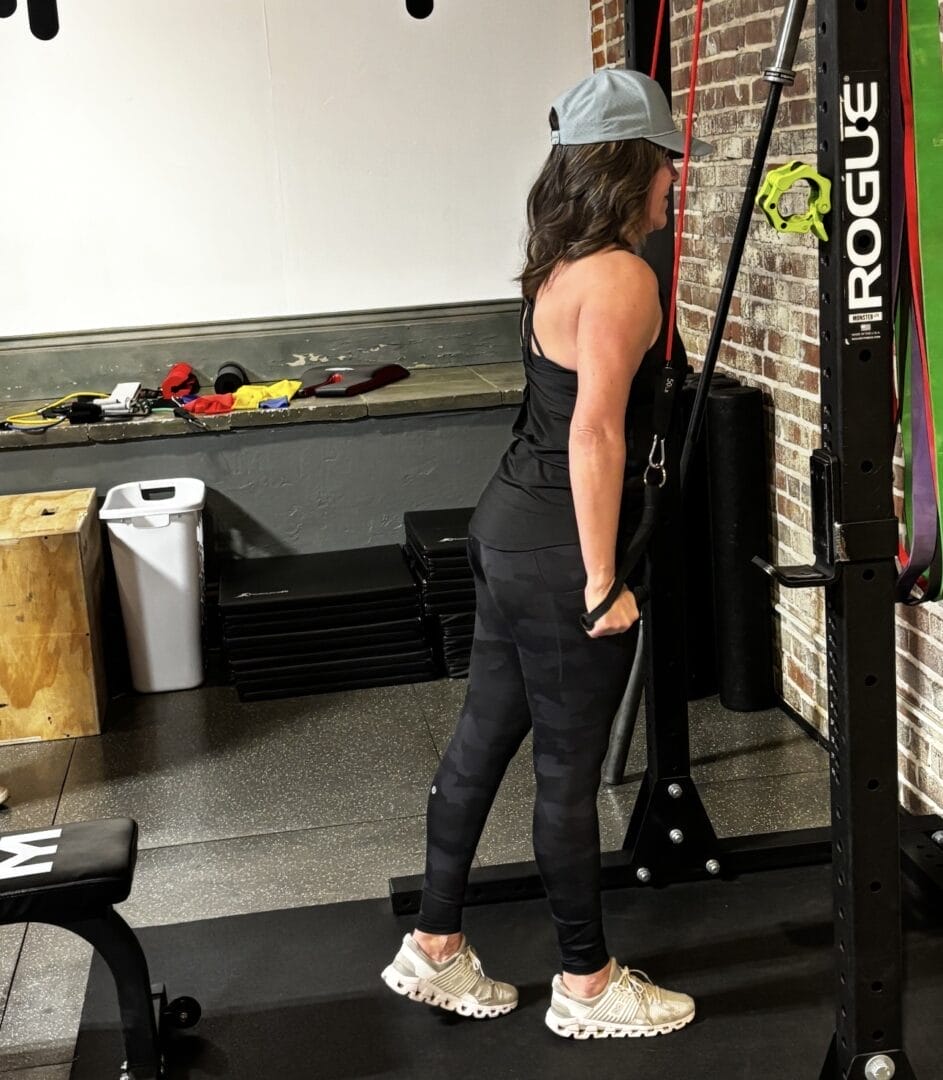
We also don’t want to hit that last rep before failure. This is where you do complete your final rep, but it’s usually what we call a “grinder.” Super slow and maybe a bit shaky, and there’s no chance of getting another rep. Again, this creates a lot of fatigue.
We want to stop the rep just shy of that rep, meaning we’re leaving 1 rep in the tank.
We’re not hitting failure, we’re not leaving 0 reps in the tank, we’re not leaving 2 or 3 reps in the tank…
Just leave 1 rep in the tank.
Now you’re not going to do this perfectly…ever. But especially when you get started.
So if you hit failure every once in a while, that’s ok! You’re learning the limits of your body. Hitting failure or doing that final rep before failure isn’t a bad thing, but once you learn where that limit is…practice leaving 1 rep in the tank.
This gets us a really great stimulus without causing too much fatigue.
One more quick note on this: the number of reps you do in a set really doesn’t matter. A set of 4 reps, 30 reps, or anywhere in between will produce the exact same result as long as you’re roughly within 1 rep shy of failure.
Why? Because it’s the last 4–5 reps before failure that truly drive progress.
Which means all the reps leading up to the final 4–5 reps serve one purpose: to get you to those final 4–5 reps!
AND that also means if you’re leaving 4–5 reps in the tank on every set (even if you’re sweaty, sore, have a pump, etc.), you’re going to make little to no progress.
At Steel, we do prefer the 4–10 rep range for most clients on most exercises, but for today, don’t worry about how many reps you’re doing. Just make sure you’re getting to 1 rep shy of failure.
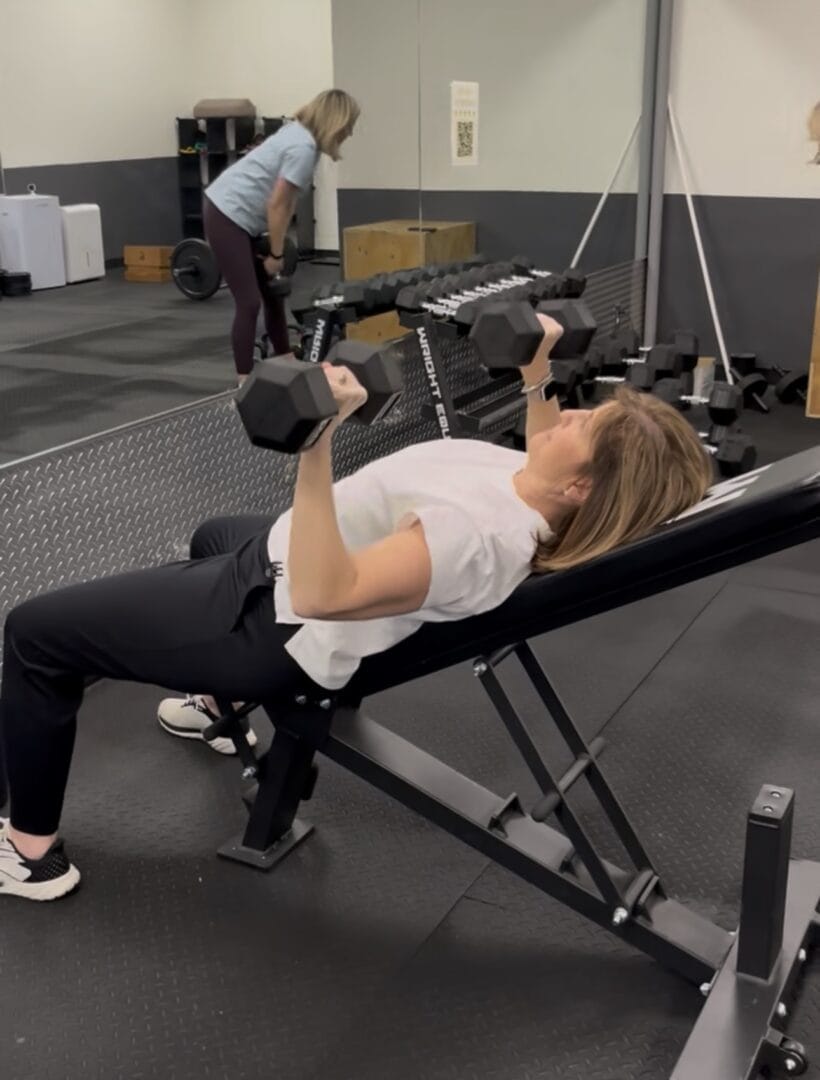
Hit Each Muscle Group With 2–3 Sets, 2x/Week
Once you’ve mastered points 1–4, you’re ready to put it all together.
Set up your workouts so you can hit each muscle group in 2 workouts per week and do 2–3 sets per muscle group.
This leaves you with each muscle being hit for 4–6 sets per week.
It doesn’t sound like much, especially when most people do 10–20 sets per muscle per week, but in the vast majority of cases it’s because one or more of points 1–4 are missing.
When any of these 5 steps are missing, you’re going to see much slower progress.
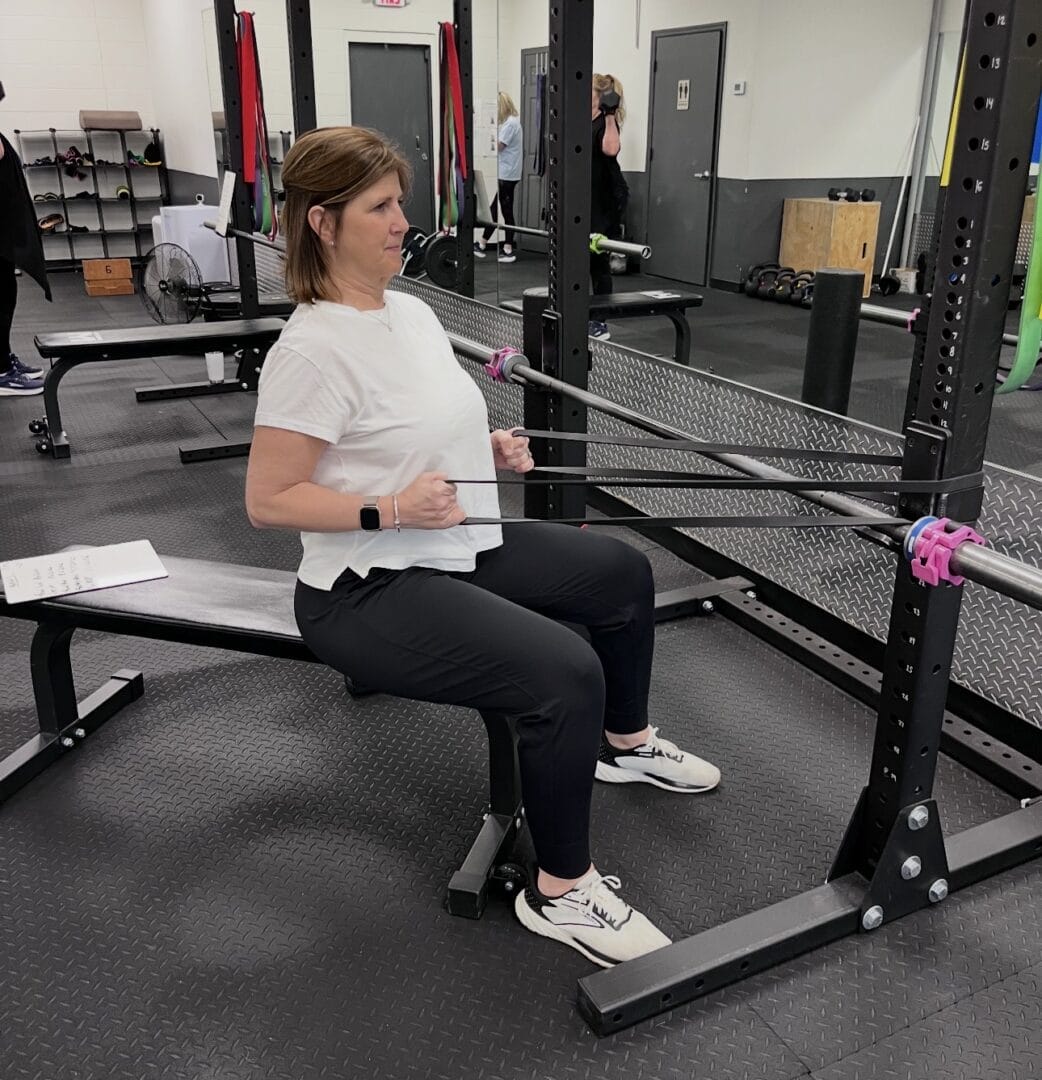
But when you’re dialed in on all 5 points, you’ll be shocked at how much progress you make with relatively low levels of work.
And look, my advice isn’t because we want you to be lazy. It’s because our approach is efficient!
Implement these 5 steps today, and you’ll see better results than 95% of people in gyms across America.
And if you want help implementing these 5 steps, join our 12-Week Program at Steel!
We offer a highly personalized plan where we coach you across strength training, nutrition, and what to do outside the gym so you can get stronger, lose weight, and feel the best you’ve felt in years!